Customizing Induction Motors for Enhanced Performance
Understanding Customization in Induction Motors
The Role of Precision Engineering in Motor Customization
Customization in induction motors hinges on precision engineering. This discipline ensures that every component of the motor meets specific performance criteria tailored to particular applications. Precision engineering enhances the reliability and efficiency of custom motors. Engineers utilize advanced techniques and technologies such as computer-aided design (CAD) and finite element analysis (FEA) to create designs that optimize performance. These methods allow for intricate adjustments to motor specifications, such as rotor design and stator configuration, which significantly impact efficiency and power output. In industries where performance is non-negotiable, precision engineering transforms standard induction motors into high-performance machines capable of handling extreme conditions and loads.
Types of Induction Motors: A Brief Overview
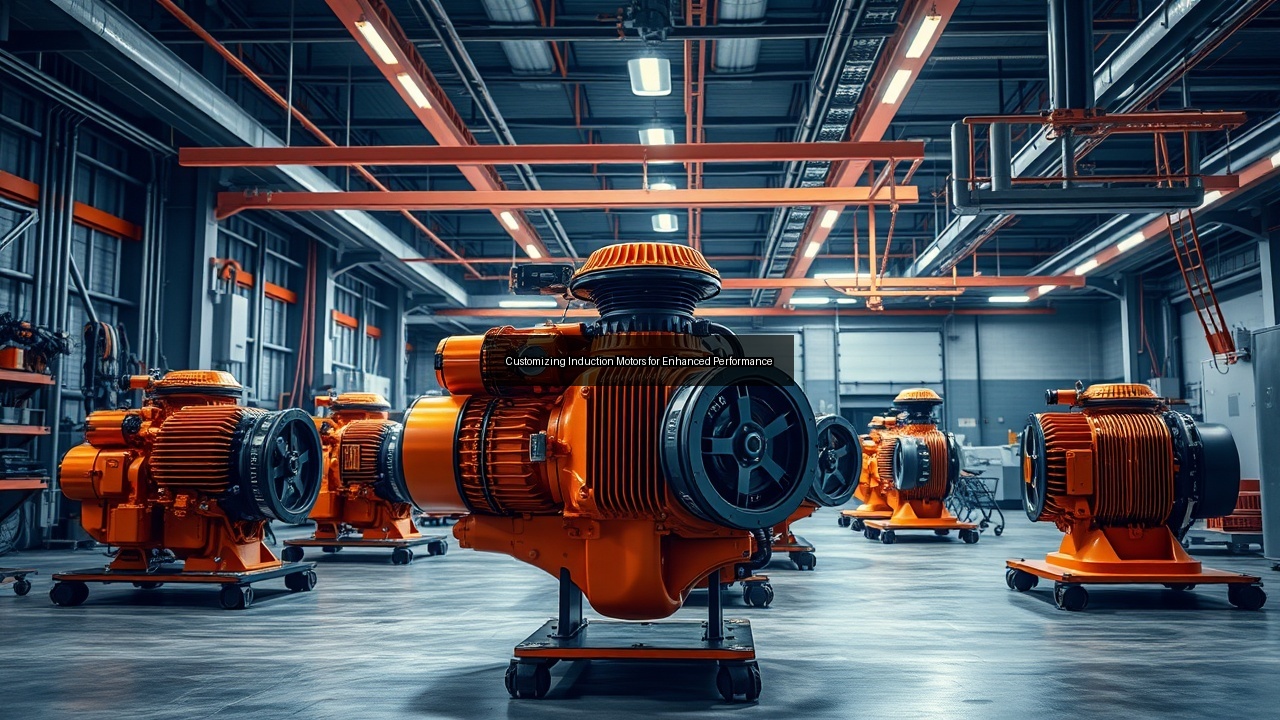
Induction motors fall primarily into two categories: squirrel cage and wound rotor designs. Squirrel cage induction motors dominate due to their simplicity and robustness. They consist of a rotor made of conductive bars shorted at both ends, which produces a magnetic field when alternating current flows through the stator. Wound rotor motors, on the other hand, feature windings on the rotor, allowing for improved starting torque and speed control through external resistances. Understanding these differences is crucial for selecting the right custom motor for an application. For example, custom motors designed for heavy load applications might favor wound rotors, while squirrel cage designs may suffice for less demanding environments. Each type offers distinct advantages that engineers exploit to meet specific operational needs.
Benefits of Custom Electric Motors in Various Applications
Custom electric motors provide significant advantages across a multitude of applications. Tailoring motor specifications leads to increased efficiency, reduced energy consumption, and enhanced performance. Industries such as automotive, manufacturing, and robotics benefit from motors designed to meet unique operational requirements. For instance, in the truck industry, custom motors improve fuel efficiency and reduce emissions, aligning with environmental standards. In robotics, precision-engineered motors enable greater accuracy and control, which is essential for complex tasks. These benefits extend to generators as well, where custom induction motors enhance energy conversion efficiency. Ultimately, the transition to custom electric motors reflects a broader trend toward specialization in engineering, where each motor serves a precise function, thereby maximizing performance and minimizing waste.
Key Components and Technologies for Enhanced Performance
Brushless DC vs. Traditional DC Motors
Brushless DC motors (BLDC) and traditional DC motors serve distinct purposes in the realm of custom motors. BLDC motors eliminate the need for brushes, resulting in increased efficiency and reliability. They offer precise control over speed and torque, making them ideal for applications requiring high responsiveness, such as servo motors in robotics. Traditional DC motors, while simpler in design, suffer from wear and tear due to brushes, leading to maintenance concerns in demanding environments. In contrast, the absence of brushes in BLDC motors means lower operational costs and longer lifespans. When considering customization, the choice between these two types depends on the specific requirements of the application, such as the need for compact design, efficiency, and control precision.
The Importance of Gear Systems in Custom Motors
Gear systems play a crucial role in enhancing the performance of custom motors. Gears allow for the adjustment of torque and speed, enabling motors to operate efficiently across various conditions. In custom electric motors, the integration of gear systems aligns the motor’s output with the specific demands of applications. For example, in heavy machinery or trucks, gear systems can amplify the torque output, allowing the motor to handle greater loads without compromising performance. Choosing the right gear ratio is critical; it directly influences the motor’s efficiency and responsiveness. Engineers must consider factors such as load requirements and operational speed to design gear systems that complement custom induction motors, ensuring optimal performance and durability.
Synchronous Motors and Their Applications in Customization
Synchronous motors offer unique advantages in the customization of electric motors. Unlike induction motors, synchronous motors operate at a constant speed, directly linked to the supply frequency. This characteristic makes them ideal for applications requiring precise speed control, such as in robotics and industrial automation. Custom designs can incorporate features that enhance efficiency and reduce energy consumption. For example, engineers can tailor synchronous motors for specific voltage and frequency ranges, ensuring optimal performance in diverse settings. Industries leveraging synchronous motors benefit from reduced operational costs and increased productivity. Whether integrated into generators or used in specialized machinery, the versatility of synchronous motors proves invaluable in the landscape of custom electric motors.
Manufacturing and Inventory Considerations
Streamlining Production for Custom Motors
Efficient manufacturing processes are essential for producing high-quality custom motors. Streamlining production involves implementing advanced manufacturing techniques, such as lean manufacturing and just-in-time (JIT) inventory management. These approaches minimize waste, reduce lead times, and enhance flexibility in responding to market demands. Automation in production lines can facilitate faster assembly and quality checks, ensuring that each custom motor meets rigorous standards. Additionally, utilizing advanced materials can strengthen motor components while keeping production costs manageable. By focusing on efficiency in the manufacturing process, companies can deliver custom electric motors that not only meet but exceed client expectations, fostering long-term relationships and repeat business.
Managing Inventory for Custom Electric Motor Projects
Inventory management poses unique challenges in the realm of custom electric motors. Each project often requires a distinct set of components tailored to specific motor designs, complicating traditional inventory practices. Effective management involves establishing relationships with suppliers to ensure timely access to the necessary materials. Implementing inventory tracking systems can also provide real-time data, enabling manufacturers to make informed decisions about stock levels and reordering. Custom motor projects benefit from a strategic approach to inventory, balancing the need for sufficient materials without incurring excess costs. By optimizing inventory management, companies can enhance production flow and maintain the agility required to adapt to shifting project demands.
Quality Control in the Manufacturing of Customized Motors
Quality control remains a cornerstone of manufacturing custom motors. Rigorous testing protocols ensure that each motor performs to specifications and meets regulatory standards. From initial design verification to final performance assessments, quality control processes must be thorough and systematic. Techniques such as statistical process control (SPC) help monitor production quality, while testing under varying conditions guarantees reliability in real-world applications. Implementing a robust quality assurance program not only enhances product performance but also builds trust with clients. Manufacturers that prioritize quality control in their custom electric motor projects position themselves as leaders in the market, attracting customers seeking dependable solutions.
Applications of Custom Induction Motors
Using Custom Motors in Truck and Automotive Industries
Custom induction motors play a pivotal role in the truck and automotive industries. These industries require motors that can withstand harsh conditions while delivering optimal performance. Custom motors designed for trucks often prioritize torque and durability, enabling heavy loads to be managed efficiently. Electric motors in automotive applications focus on enhancing fuel efficiency and reducing emissions, aligning with global sustainability initiatives. By customizing motors to meet specific vehicle requirements, manufacturers can improve overall vehicle performance and user satisfaction. Innovations in electric motor technology continue to drive advancements in these sectors, with custom induction motors leading the way toward more sustainable, efficient transportation solutions.
Integrating Generators with Custom Induction Motors
The integration of generators with custom induction motors creates a powerful synergy in energy production. Custom motors designed for generator applications optimize energy conversion, enhancing overall system efficiency. This integration is particularly beneficial in renewable energy sectors, where maximizing output from wind or solar sources is critical. Engineers can tailor motor specifications to align with generator requirements, ensuring seamless operation and improved performance. Additionally, custom induction motors can adapt to varying loads, providing flexibility in energy production. As industries increasingly shift toward sustainable energy solutions, the role of custom electric motors in generator applications will continue to expand, driving innovation and efficiency.
The Future of Electric Motors in Modern Technology
The future of electric motors, particularly custom induction motors, promises significant advancements driven by technology and innovation. Emerging trends such as automation, artificial intelligence, and the Internet of Things (IoT) influence motor design and applications. Custom motors will increasingly integrate smart technologies, allowing for real-time monitoring and enhanced performance optimization. The demand for energy-efficient solutions will propel further advancements, leading to the development of motors with lower energy consumption and higher efficiency. As industries embrace electrification and seek sustainable alternatives, custom electric motors will remain at the forefront, shaping the landscape of modern technology. The continued evolution of motor design and application will redefine possibilities, paving the way for a more efficient and sustainable future.