Unlocking Efficiency with Custom Process Hoppers for Bulk Material Handling
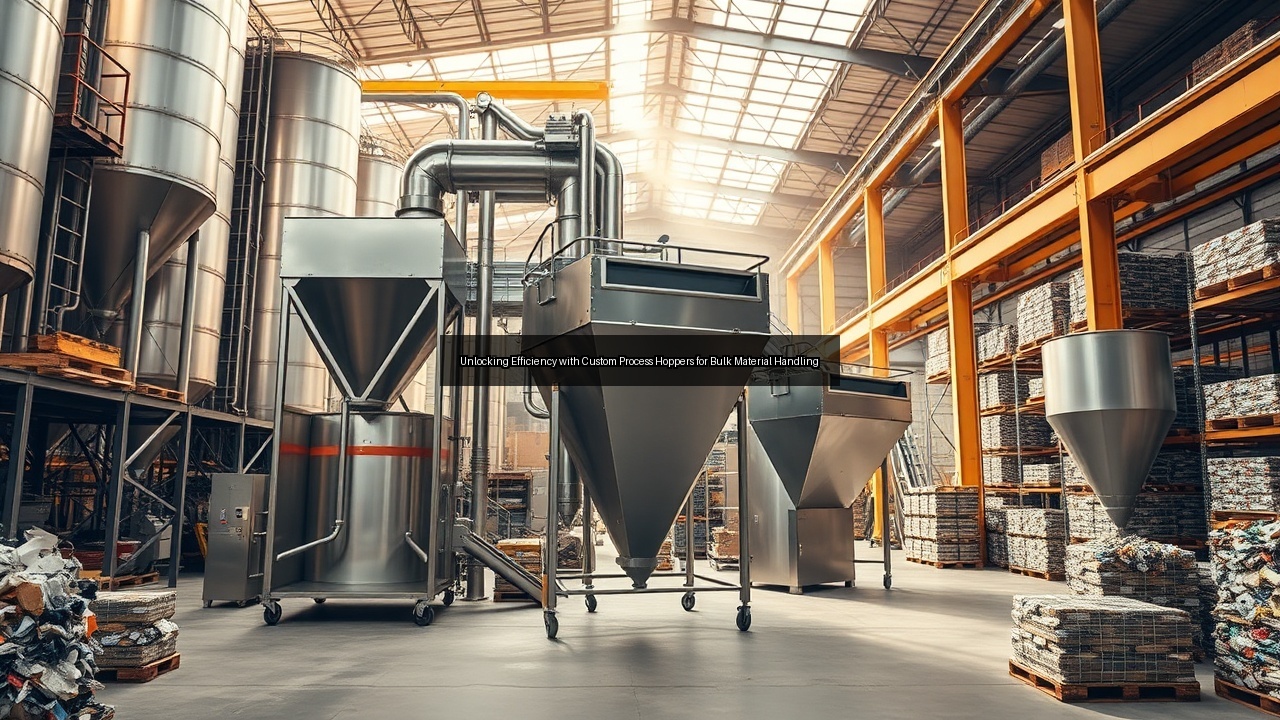
Understanding Custom Process Hoppers in Bulk Material Handling
What Are Custom Process Hoppers?
Custom process hoppers serve as a crucial component in the efficient handling of bulk materials across various industries. Unlike standard hoppers, custom hoppers are tailored to meet specific operational requirements, ensuring optimal performance in bulk material management. These hoppers can accommodate a range of materials, including aggregates, powders, and recyclables, making them versatile for manufacturing and warehousing applications. They often integrate seamlessly with conveyor systems, enhancing the flow of materials from one point to another. Customization allows businesses to address unique challenges, such as space constraints and material characteristics, while maximizing efficiency in their operations.
Key Features of Custom Hoppers
Custom hoppers come equipped with a variety of features designed to streamline bulk material handling. Key characteristics include adjustable gate mechanisms that control the flow of materials, ensuring precise dispensing rates. The incorporation of cone shapes in the hopper design promotes efficient flow and minimizes material clumping. Additionally, many custom hoppers are constructed with durable materials like stainless steel or heavy-duty sheet metal, which withstand harsh environments and resist corrosion. Other features may include integrated sensors for monitoring material levels and safety mechanisms such as guardrails to protect operators. These features collectively enhance the efficiency and safety of bulk material handling processes.
Importance of Material Selection in Hopper Fabrication
Choosing the right material for fabricating custom process hoppers significantly impacts their longevity and performance. Stainless steel is often preferred for its strength and resistance to corrosion, making it ideal for industries handling harsh chemicals or wet materials. On the other hand, sheet metal offers a cost-effective alternative for less demanding applications. The selection process should consider factors such as the type of bulk materials being handled, environmental conditions, and the required durability. Proper material selection not only improves the lifespan of the hoppers but also enhances their operational efficiency, reducing maintenance costs and downtime.
Design and Engineering of Custom Process Hoppers
Tailoring Dimensions for Optimal Performance
Dimension customization plays a vital role in the design of process hoppers, directly influencing their efficiency in bulk material handling. Accurate sizing ensures that hoppers can accommodate the specific volume of materials without overflow or bottlenecking. Engineers often begin by analyzing the bulk density and flow characteristics of the materials to determine the optimal hopper dimensions. This includes height, width, and angle of repose, which affects how materials settle and flow within the hopper. By tailoring these dimensions, companies can enhance operational workflows, reduce material waste, and improve overall productivity in their manufacturing processes.
Incorporating Cone Shapes for Efficient Flow
The design of custom process hoppers frequently incorporates cone-shaped configurations to facilitate efficient material flow. A conical shape promotes gravity-assisted movement, allowing bulk materials to discharge smoothly and minimizing the risk of blockages. This design is particularly effective for granular materials, which tend to flow better through a funneling effect. Additionally, cone-shaped hoppers can help in the segregation of different bulk materials, making it easier to manage diverse inventories. By optimizing flow characteristics, businesses can enhance their conveyor systems' performance and reduce the time spent on material handling.
Choosing Materials: Stainless Steel vs. Sheet Metal
The decision between stainless steel and sheet metal for custom process hoppers can significantly affect their performance and suitability for specific applications. Stainless steel offers unmatched durability, making it the preferred choice for industries that deal with corrosive materials or require high hygiene standards, such as food processing and pharmaceuticals. In contrast, sheet metal hoppers may suffice for applications with less stringent requirements, providing a lighter and often more economical solution. Each material comes with its own set of advantages and trade-offs, so companies must evaluate their unique needs, including cost, maintenance requirements, and environmental conditions, before making a choice.
Applications of Custom Process Hoppers in Various Industries
Integrating Hoppers with Conveyor Systems
Custom process hoppers are essential for enhancing the efficiency of conveyor systems in various industries. By providing a reliable source of bulk materials, hoppers feed conveyor belts with a steady flow, minimizing delays in production. This integration allows for streamlined operations in facilities handling large volumes of materials, such as manufacturing plants, warehouses, and distribution centers. Additionally, custom hoppers can be designed to work in tandem with automated systems, further optimizing productivity. As a result, businesses can achieve significant improvements in throughput and operational efficiency.
Role in Recycling and Handling Recyclables
In the recycling industry, custom process hoppers play a pivotal role in managing recyclables. They enable the efficient sorting and processing of materials such as plastics, metals, and paper. Hoppers tailored to handle specific recyclable materials can enhance the overall workflow, making it easier to separate mixed waste and direct it through appropriate recycling channels. The use of specialized hoppers reduces contamination in the recycling stream, ultimately leading to higher quality recycled products. This efficiency not only supports environmental sustainability but also improves profitability for companies engaged in recycling operations.
Utilization in Concrete and Scrap Processing
Concrete and scrap processing industries benefit immensely from custom process hoppers. Hoppers designed for concrete handling allow for precise measurement and mixing of ingredients, ensuring consistent quality in concrete production. In scrap processing, custom hoppers facilitate the collection, sorting, and transportation of various metal types. These hoppers can accommodate heavy loads and are often reinforced to withstand the wear and tear associated with handling abrasive materials. By optimizing the intake and processing of concrete and scrap, companies can improve their operational efficiency and reduce costs.
Enhancing Productivity with Custom Process Hoppers
Maximizing Warehouse Efficiency with Pallet Racks
Custom process hoppers, when integrated with pallet racks, significantly enhance warehouse efficiency. By organizing bulk materials effectively, hoppers and pallet racks together create a streamlined workflow that minimizes retrieval times. Operators can quickly access materials stored in hoppers atop pallet racks, allowing for rapid replenishment and order fulfillment. This synergy improves inventory management, reduces the likelihood of errors, and optimizes space utilization. Companies that adopt this combination often report increased productivity and reduced operational costs, making it a smart investment for any warehousing operation.
Utilizing Guardrails and Casters for Safety and Mobility
Safety and mobility are paramount in bulk material handling, and custom process hoppers can incorporate guardrails and casters to enhance both. Guardrails protect operators from accidental falls and provide structural support to hoppers, ensuring safe access during maintenance or material loading. Casters, on the other hand, allow hoppers to be easily maneuvered throughout a facility, adapting to changing workflow demands. This flexibility can lead to improved safety standards and more efficient use of space, as operators can reconfigure the layout based on current needs. By prioritizing safety and mobility, companies create a more productive work environment.
Case Studies: Companies Boosting Productivity with Custom Hoppers
Numerous companies have successfully enhanced their productivity by implementing custom process hoppers. For instance, a manufacturing firm that produces concrete components revamped its operations by integrating cone-shaped hoppers with its conveyor systems. This change led to a 30% increase in output, as materials flowed more efficiently through the production line. Another company in the recycling sector utilized custom hoppers to streamline its sorting process, resulting in a 25% reduction in contamination rates. These case studies illustrate the tangible benefits of investing in custom hoppers, reinforcing their role as a critical asset in bulk material handling.
See Also
- From Scrap to Steel How Custom Hoppers Optimize Material Flow
- Why Investing in Custom Hoppers Can Save You Money in the Long Run
- Designing Custom Process Hoppers with Flexibility in Mind
- The Future of Custom Process Hoppers in Sustainable Manufacturing
- Exploring the Versatility of Custom Hoppers for Various Industries